Product Description
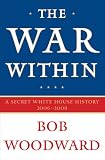
As violence in Iraq reaches unnerving levels in 2006, a second front in the war rages at the highest levels of the Bush administration. In his fourth book on President George W. Bush, Bob Woodward takes readers deep inside the tensions, secret debates, unofficial backchannels, distrust and determination within the White House, the Pentagon, the State Department, the intelligence agencies and the U.S. military headquarters in Iraq. With unparalleled intimacy and detail, this gripping account of a president at war describes a period of distress and uncertainty within the U.S. government from 2006 through mid-2008.
The White House launches a secret strategy review that excludes the military. General George Casey, the commander in Iraq, believes that President Bush does not understand the war and eventually concludes he has lost the presidents confidence. The Joint Chiefs of Staff also conduct a secret strategy review that goes nowhere. On the verge of revolt, they worry that the military will be blamed for a failure in Iraq.
Secretary of State Condoleezza Rice strongly opposes a surge of additional U.S. forces and confronts the president, who replies that her suggestions would lead to failure. The president keeps his decision to fire Secretary of Defense Donald Rumsfeld from Vice President Dick Cheney until two days before he announces it. A retired Army general uses his high-level contacts to shape decisions about the war, as Bush and Cheney use him to deliver sensitive messages outside the chain of command.
For months, the administrations strategy reviews continue in secret, with no deadline and no hurry, in part because public disclosure would harm Republicans in the November 2006 elections. National Security Adviser Stephen J. Hadley tells Rice, "Weve got to do it under the radar screen because the electoral season is so hot."
The War Within provides an exhaustive account of the struggles of General David Petraeus, who takes over in Iraq during one of the bleakest and most violent periods of the war. It reveals how breakthroughs in military operations and surveillance account for much of the progress as violence in Iraq plummets in the middle of 2007.
Woodward interviewed key players, obtained dozens of never-before-published documents, and had nearly three hours of exclusive interviews with President Bush. The result is a stunning, firsthand history of the years from mid-2006, when the White House realizes the Iraq strategy is not working, through the decision to surge another 30,000 U.S. troops in 2007, and into mid-2008, when the war becomes a fault line in the presidential election.
The War Within addresses head-on questions of leadership, not just in war but in how we are governed and the dangers of unwarranted secrecy.
Rate Points :4.0
Binding :Hardcover
Label :Simon & Schuster
Manufacturer :Simon & Schuster
ProductGroup :Book
Studio :Simon & Schuster
Publisher :Simon & Schuster
EAN :9781416558972
Price :$32.00USD
Lowest Price :$6.45USD
Customer ReviewsMore Horifying than anyone could have imagined
Rating Point :5 Helpful Point :0
This is the concluding volume on Woodwards account of the Bush administration and it represents a significant departure from the way that this team was represented in the first and second books. Here all the chickens appear to have come home to roost and it is not a pretty picture. Conflict brings out the best and worst in people. In this book there is plenty of the latter and often too little of the former.
The portrait of the president is interesting. After reading Woodwards book I cannot imagine a more unpleasant event than to actually meet George W. Bush. I have never been a fan, but the portrait that Woodward draws here is one of a man who is at times boorish, profoundly ignorant and seemingly incapable of critical thought. Bush is eager to associate himself with past chief executives who were "war presidents" such as Washington, Lincoln and FDR. One should bear in mind that Buchanan was also a "war president" and this is the person who he seems to bear the greatest resemblance. The primary difference is that where Buchanan, even as secretary of state was too cautious, Bush was too rash. He appears to be convinced, for no apparent reason that he will prevail merely because he was convinced of the correctness of his course. Right may make right, but to prevail one needs to come up with a strategy that will work and not be unafraid to change course. Woodward cites Bushs failure to lead, I would add that he also demonstrates a failure to think.
This book is not a kind of non-fiction "Vanity Fair," which was subtitled "the novel without a hero." There are plenty of heroic and dedicated individuals in the book. General Petraeus is probably the person who comes off the best. In the previous books this role was filled by Colin Powell whose views are cited at the beginning of the book and who is as usual correct in his analysis of the situation. If I had to critique this book for any negative reason, I wish Woodward would have interviewed Colin Powell and even Rumsfield as he did Bush and Rice for the summing up chapter.
Another person who is particularly compelling is Col. (now General) H.R. McMaster. In some respects the statements made by this member of the armed forces filled the role that Colin Powell did in previous volumes. He always has a good sense of what was necessary and ground truth on the situation. Not only is he a hero from the 1991 war in Iraq, but he is also shown as an outstanding strategic thinker. I think that his book on Kennedy, Johnson, McNamara, the Joint Chiefs, and Vietnam probably is essential reading and probably something that might be read in conjunction with this series by Woodward. I was very happy to learn that McMasters was promoted in Sept 2008 and hope that he has a long career with the military. The nation needs people such as McMaster to lead.
In conclusion, this is outstanding book, somewhat scary in terms of how the government operates and how individuals can avoid responsibility. It is worth reading by every citizen interested in the war in Iraq and how we gotten to where we are.
Rating Point :4 Helpful Point :0
This is Woodwards fourth book on the Bush Presidency at war. Its also, I thought, the best. As with all of Woodwards books, the reader is left to wonder how exactly Woodward acquired all of his insider information. However, it is clear he had access to the biggest players involved in the Bush Administrations efforts in Iraq. He obviously interviewed the most important people. Any criticisms from the pro-Bush crowd can be offered if those insiders feel so inclined. The White House itself issued a rebuttal of sorts, but still it seems that the bulk of Woodwards reporting has gone unchallenged. That may well be because those who know inside stuff cannot talk about it, but thats the way it goes in a democracy that treasures civil liberties and press freedoms. Whiners need not run for office (nor should anyone try to stop anyone else from whining). We can either not have the Woodward book, or we can have it with the understanding that there are likely certain inaccuracies. Ill take the latter, hands down. Those who had their mitts in devising poorly thought-out plans will have their shot at offering other perspectives (see Feith, Bolten, etc.)
This book covers the Bush Administration from early 2006 until about mid 2008. We see the President try to deal with the increasing problems that were evident in Iraq, problems that contradicted President Bushs overly optimistic public statements. We also see the efforts of those in the Pentagon, State Department, and in Iraq as they tried to come up with a strategy to address the increasing violence. As we mostly now know, the "surge" and elements often incorrectly associated with that title have reduced the violence in Iraq. What we havent known about, and what we hope Woodward is accurate about, are the discussions, arguments, etc., that went into coming up with the surge. Fascinating stuff. People of all political persuasions can take comfort in knowing that the smartest people in the world of every ideology were hard at work on the problem and all were striving with good intentions. (Certainly, good intentions do not ensure good policy and may at times encourage foolhardy policies.)
When all is said and done, Woodward offers his thoughts on President Bushs war leadership, and Woodward makes a strong case for weak war leadership. Ultimately, Bush knew things werent going well and was lying to the American people when he claimed all was well. He should have trusted the American people at an earlier stage of the war. Perhaps the Washington clock would have had a longer run time. The President should have also been more honest with himself. Contrary to claims of the right, the media was more accurate about the state of Iraq than the President was, and it seems that the President willed himself to believe things that were simply untrue. Who paid the price for those huge mistakes? He did to a small degree: his place in history will likely be among the lower ranked of our presidents. At best, he can hope for below average. We invaded Iraq because we believed that Saddam was a threat to us, and we believed Saddam was a threat because we believed he had WMDs. We now know we were wrong, and "the Decider" bears the most blame for that mistake. It was his call, and he got it wrong. Perhaps worse is that the US plan for winning there was disgracefully off the mark in every regard. From the initial invasion until final implementation of the surge, the Bush team made mistake after mistake, and history has recorded those facts. But those who paid the ultimate price for those mistakes are our brave servicemen and women and lots of Iraqis.
Personally, I dont view George W. Bush as an evil man. His intentions were pure, but pure intentions... Also, though the US effort was in disarray in 2006, and although we know who is ultimately responsible for that tragic state of affairs, perhaps the best that can be said of President Bush is that he may have been the one man who could have made the surge the reality it needed to be because of his own mistakes. Time will tell, but the time that has passed so far is not flattering to President Bush, and Woodward writes about it in captivating detail.
Right Time, Right Place
Rating Point :5 Helpful Point :0
I must have been in the right state of mind because I loved this book! This is Bob Woodwards 4th book on the presidency of George W. Bush and like the first 3, The War Within takes you behind the scenes of the White House and the political/military players between 2006 and 2008 when the war in Iraq seemed to get worse every day.
Woodward explores the secrecy of a White House not wanted to show the American public its problems. The war was a mess and no one had a plan. Woodward doesnt come across as someone who is politically motivated to smear the President. In the epilogue he does promote his other books which I found tiresome, but he waits until the very end to express his own opinions on the story.
Whether you support President Bush or not, this book takes you where the decisions, arguments, and discussions took place without the public knowing. It gives just a taste of how this administration worked...or failed to work.
One of the reasons why I really enjoyed this book was because of the place I am in. I was connecting with the ideas behind it. I was looking at it from a leadership standpoint. What do you do when a plan is not working, in fact its doing the opposite?
This book will not be for everyone. I know there are many people who could care less about government and politics and thats fine. But since this is my blog and I read this book, I decided to post it and let you know that it was a good read.
It has a few pictures so some of you may enjoy that part of it!
Woodward hits another home run with The War Within
Rating Point :5 Helpful Point :0
This book is a great continuation of the Bush Presidency series and is a must read for anyone who follows White House and Washington political exploits. The book like Woodwards prior, reads fast and captures the urgency of the moment. Bobs books are a "Must Have" in any political enthusiasts library.
The kind of book I like
Rating Point :4 Helpful Point :0
I am a sucker for a book about the inner workings of a Presidency, the good Presidencies the bad Presidencies, the good books the bad books. There is some talk about quotes in the book not being accurate and that is typical of all such books, it is hard to get a straight quote without someone coloring it, the ones that said it or someone else, so I always take direct quotes with a grain of salt. Some thought Woodward is over critical of Bush, I like Bush and I didnt see that, the inside is always ugly, there are decisions and big egos, always has been and always will be. People that make light of the Presidency have no idea how hard that job is, especially during war time when you have to make decisions that affect the actual life and death of your soldiers and the affects on their families. I find it hard to believe that any President would take that responsibility lightly. My wife picked this up for me, she knows it is the kind of book I enjoy, so I cant say that made a big decision to buy the book. For someone that was suppose to have a closed Presidency, Bush was sure open and generous with his time with Woodward, someone that isnt always his biggest supporter. I suspect there is more truth in this book than fiction and Woodward is easy to read. I am not going to get into the nuts and bolts of the book, others have done that eloquently. I will say, if your the kind of person that likes to read a book about the inside workings of Government and the White House in particular you will like this book for all its warts. I will never check back here for comments, so if you have one, email me barrym@tds.net
 A dramatic and damning narrative account of how America has fought the "War on Terror"In the days immediately following September 11th, the most powerful people in the country were panic-stricken. The radical decisions about how to combat terrorists
 Pulitzer Prize-winning journalist Barton Gellmans newsbreaking investigative journalism documents how Vice President Dick Cheney redefined the role of the American vice presidency, assuming unprecedented responsibilities and making it a post of histo
 Thomas L. Friedmans no. 1 bestseller The World Is Flat has helped millions of readers to see globalization in a new way. Now Friedman brings a fresh outlook to the crises of destabilizing climate change and rising competition for energyboth of which
  "Insurgents and terrorists retain the resources and capabilities to sustain and even increase current level of violence through the next year. This was the secret Pentagon assessment sent to the White House in May 2006. The forecast of a more violent

 "The most important thing a captain can do is to see the ship from the eyes of the crew." This belief has successfully guided D. Michael Abrashoff, the captain of one of the U.S. Navys most modern and lethal warships. Abrashoff has revolutionized h
 In this offbeat approach to leadership, college president Steven B. Sample-the man who turned the University of Southern California into one of the most respected and highly rated universities in the country-challenges many conventional teachings on
  Success often depends on the strength of a single quality leadership. Winston Churchill is universally recognized as one of the 20th centurys great political leaders and his words ring just as true in the world of commerce. A wise, witty, and inspiri
 Advance praise for Motivating the "Whats In It For Me?" Workforce "The information on leading and managing generations found in this book is invaluable to all executives today. The war for talent has become increasingly fierce. Attracting and
  This perceptive, direct, and provocative book provides readers with an in-depth look into the mindset of the 68-million post-X generation. Learn what leading-edge companies are doing to get the most from this talented, but misunderstood segment of o